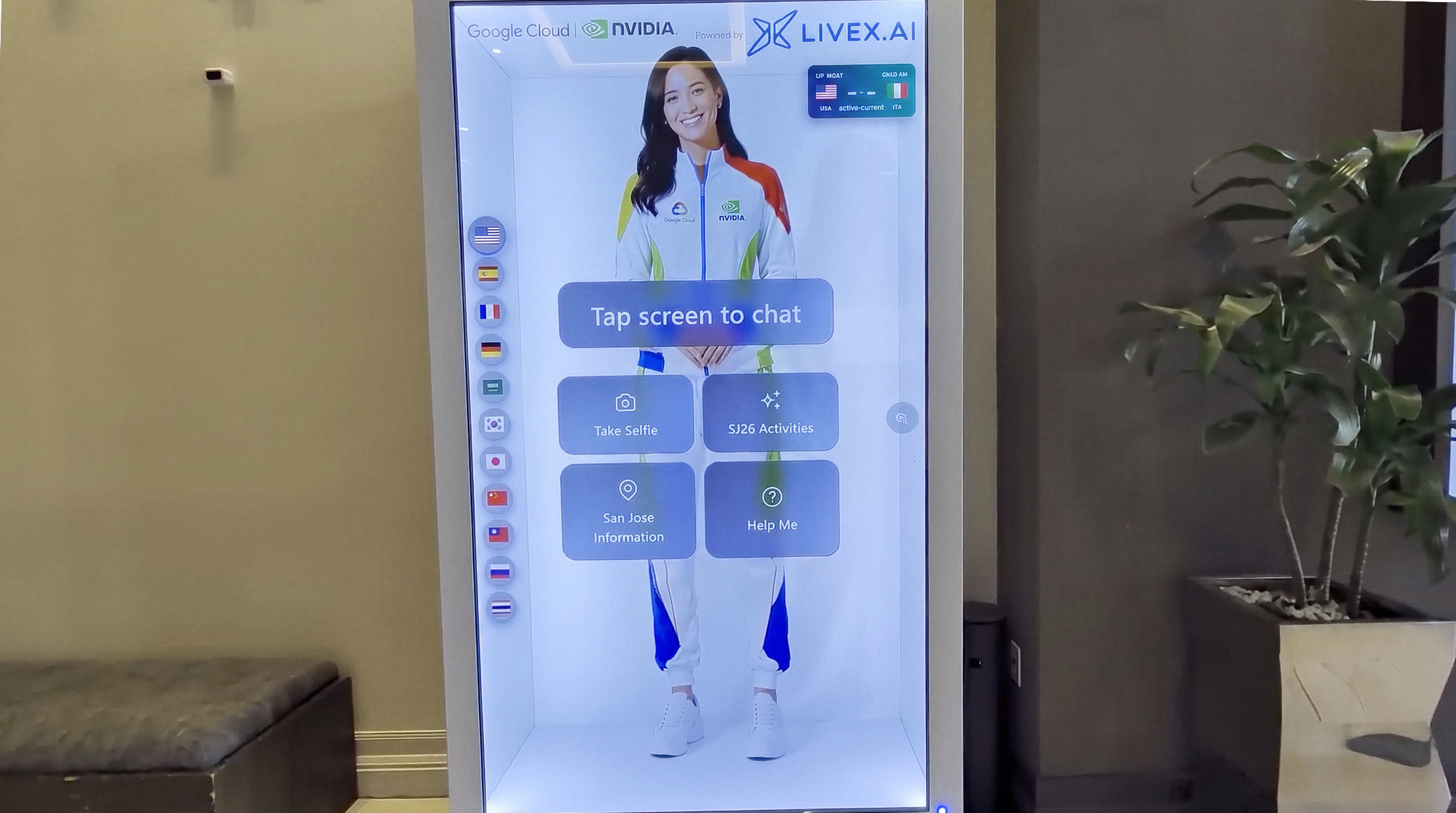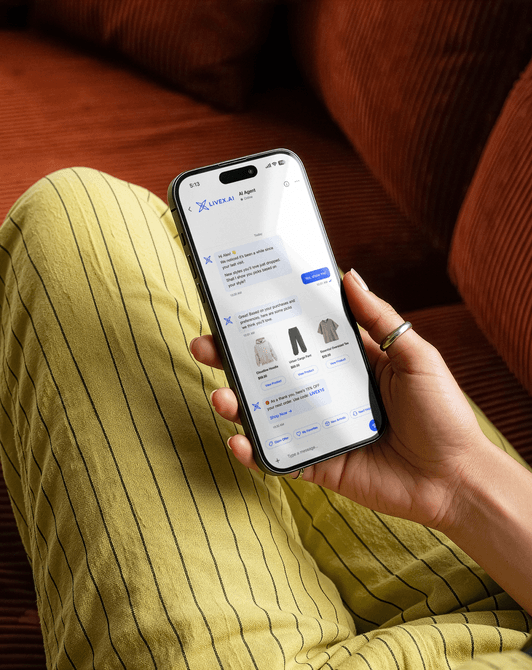
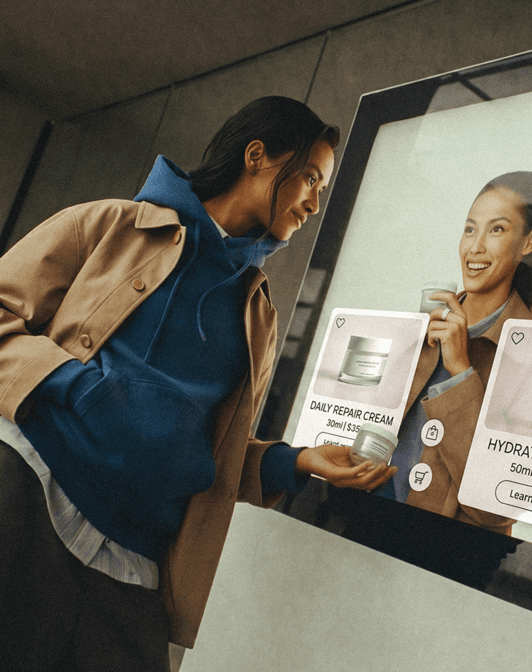

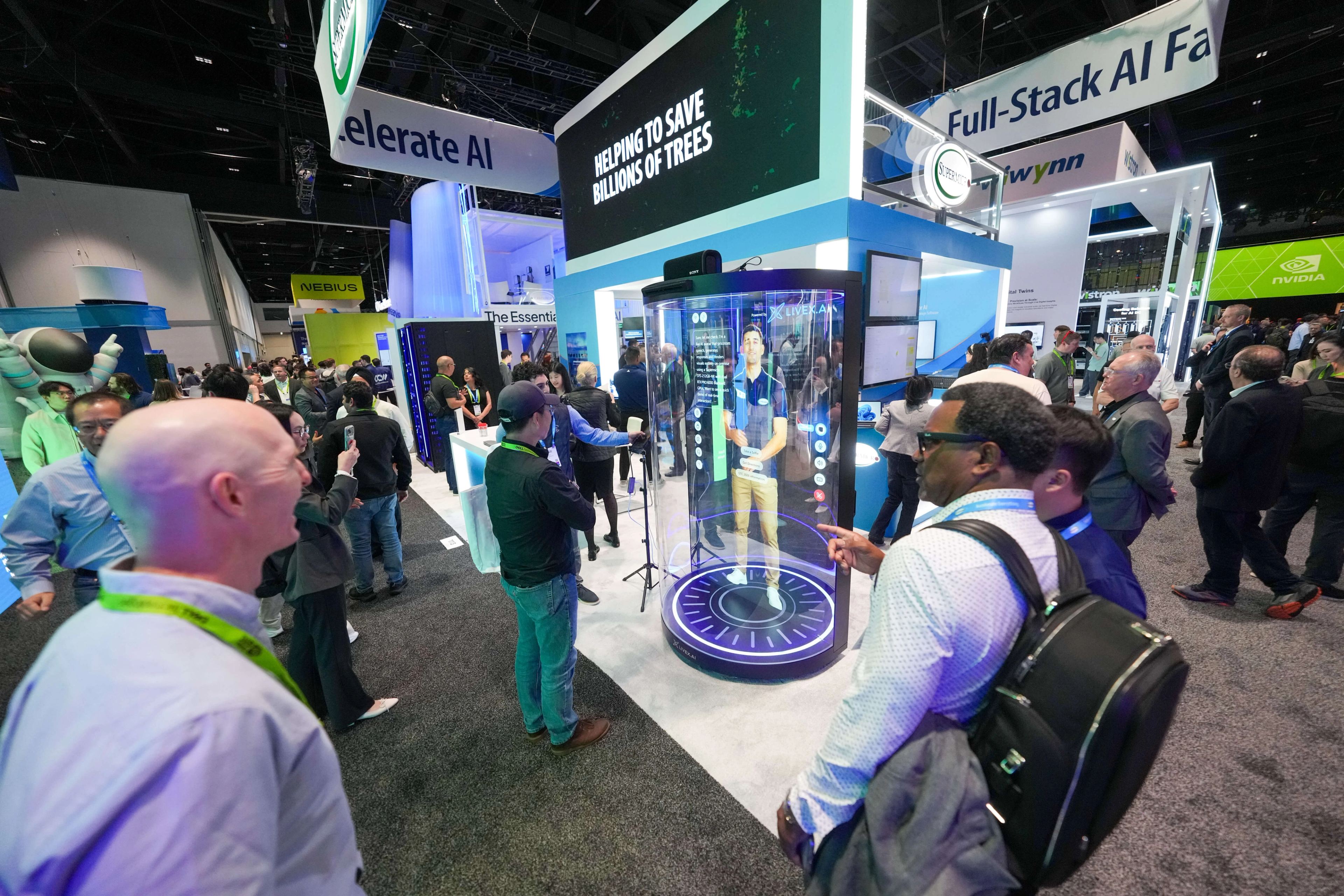
Live events are shifting from static booths to interactive experiences. That change is showing up in the market and in LiveX AI's recent deal activity. Over the last quarter, LiveX AI Holograms have powered activations for brands like NVIDIA, Puma, SuperMicro, and Google Cloud, and events such as NVIDIA GTC 2026 and the National Retail Federation’s NRF 2026. The pattern is clear: brands want something more memorable than a screen, more scalable than a human-only booth team, and more measurable than a one-off stunt.
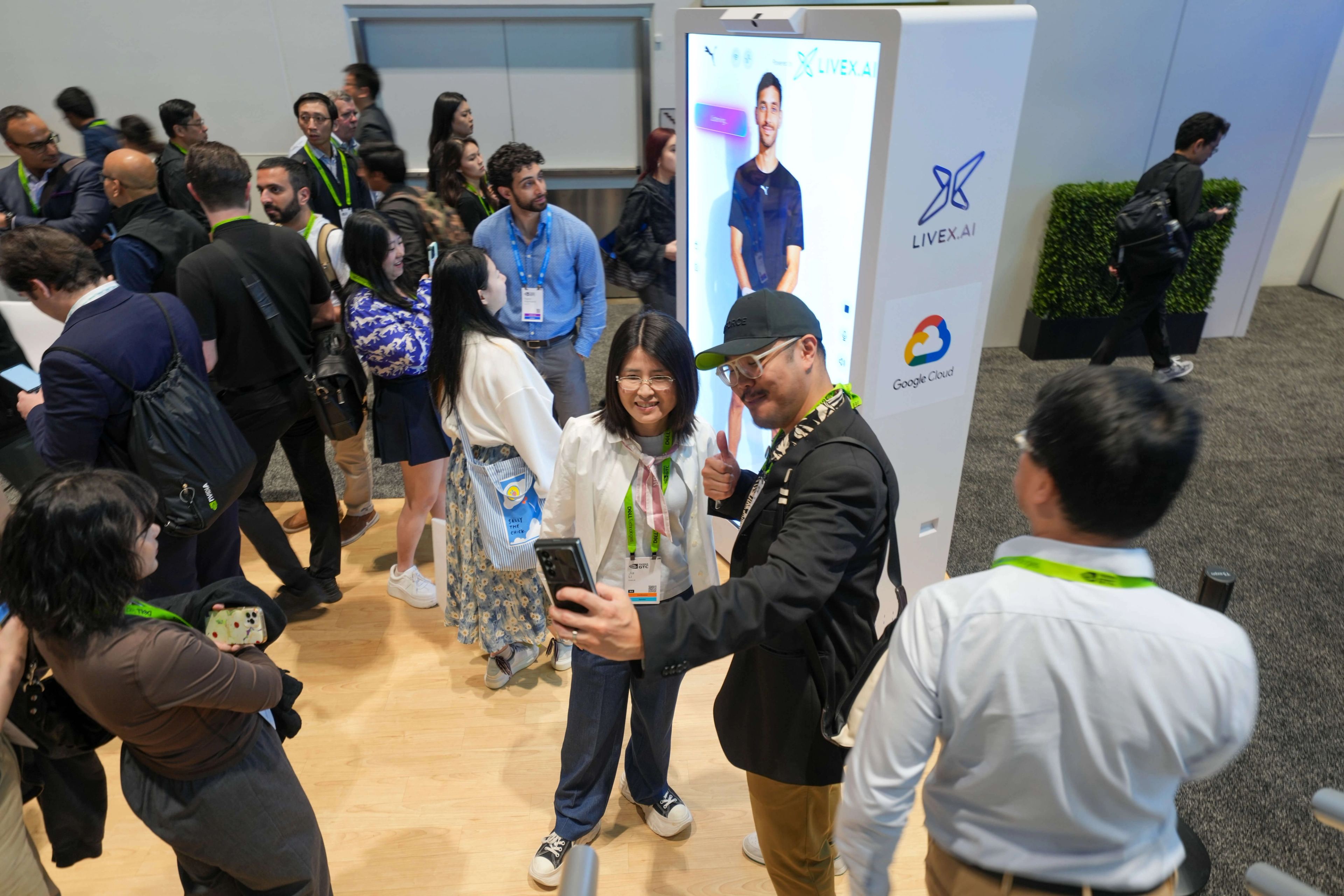
For enterprise event teams, an AI hologram booth works best when it is treated like a customer engagement system, not just a visual effect. The winning setup combines a strong physical presence, real-time conversational AI, clear attendee flows, and a post-event lead capture plan.
Why AI hologram booths are gaining traction
Event marketers are under pressure to create moments people will actually stop for. A booth has only a few seconds to earn attention on a noisy show floor. Holographic AI stands out because it combines visual novelty with useful interaction. Instead of looping video on a standard screen, visitors can ask LiveX Holograms questions, get routed to the right content, and receive a personalized experience in real time.
This matters for enterprise teams because the value is not just foot traffic. A well-designed deployment can:
- Increase qualified conversations without expanding the booth headcount
- Keep messaging consistent across every attendee interaction
- Support multilingual engagement for global events
- Capture common questions that inform follow-up sales conversations
- Extend the life of the activation through social sharing and earned attention
Recent LiveX AI deployments at conferences and tradeshows suggest the market is rewarding this format when it is connected to business outcomes.
Prerequisites before you deploy
Before a unit ships, align the operational basics.
- Goal definition: Decide whether the activation is meant to drive awareness, leads, demos, check-ins, or sponsor engagement.
- Persona design: Choose the voice, look, and role of the hologram. It might be a brand ambassador, product specialist, concierge, or event guide.
- Venue readiness: Confirm power, internet, placement, lighting, and noise conditions.
- Conversation design: Build the top questions, fallback flows, and escalation paths to a human teammate.
- Data policy: Define what gets captured, where it is stored, and how consent is handled.
- Staffing plan: Assign on-site owners for setup, traffic management, and exception handling.
- Follow-up plan: Have a plan for following up with leads that engage with your AI hologram so that you can convert the interest into revenue.
The most effective teams also prepare a short list of event-specific prompts. At GTC, that might include product demos, scheduling meetings, or guiding visitors to the right use case. At other events, it may focus on photos, wayfinding, entertainment, and sponsor storytelling.
Step 1: Start with the attendee journey
Map the full path from first glance to follow-up.
Ask:
What makes someone stop?
- What is the first question the hologram should answer?
- What is the ideal next action after the interaction?
- When should a human seller step in?
A good event deployment usually has three layers:
- Attraction: the visual presence and opening line
- Engagement: the live conversation and tailored content
- Conversion: the handoff to demo, badge scan, meeting, or CTA
If you skip this journey design, the booth projects lots of stage presence, but risks missing the full value capture of lead follow-up.
Step 2: Match hardware to the venue
Not every venue needs the same footprint. A major trade show booth, hotel ballroom foyer, and stadium concourse all behave differently. Choose hardware based on crowd density, ambient light, and expected interaction length.
For example:
- Trade shows need strong visibility from a distance and quick interaction starts
- VIP events may need a premium, polished look with concierge-style dialogue
- Sports venues benefit from durable setups and rapid-turn conversations
- Hotel event spaces often need quieter, more hospitality-oriented experiences
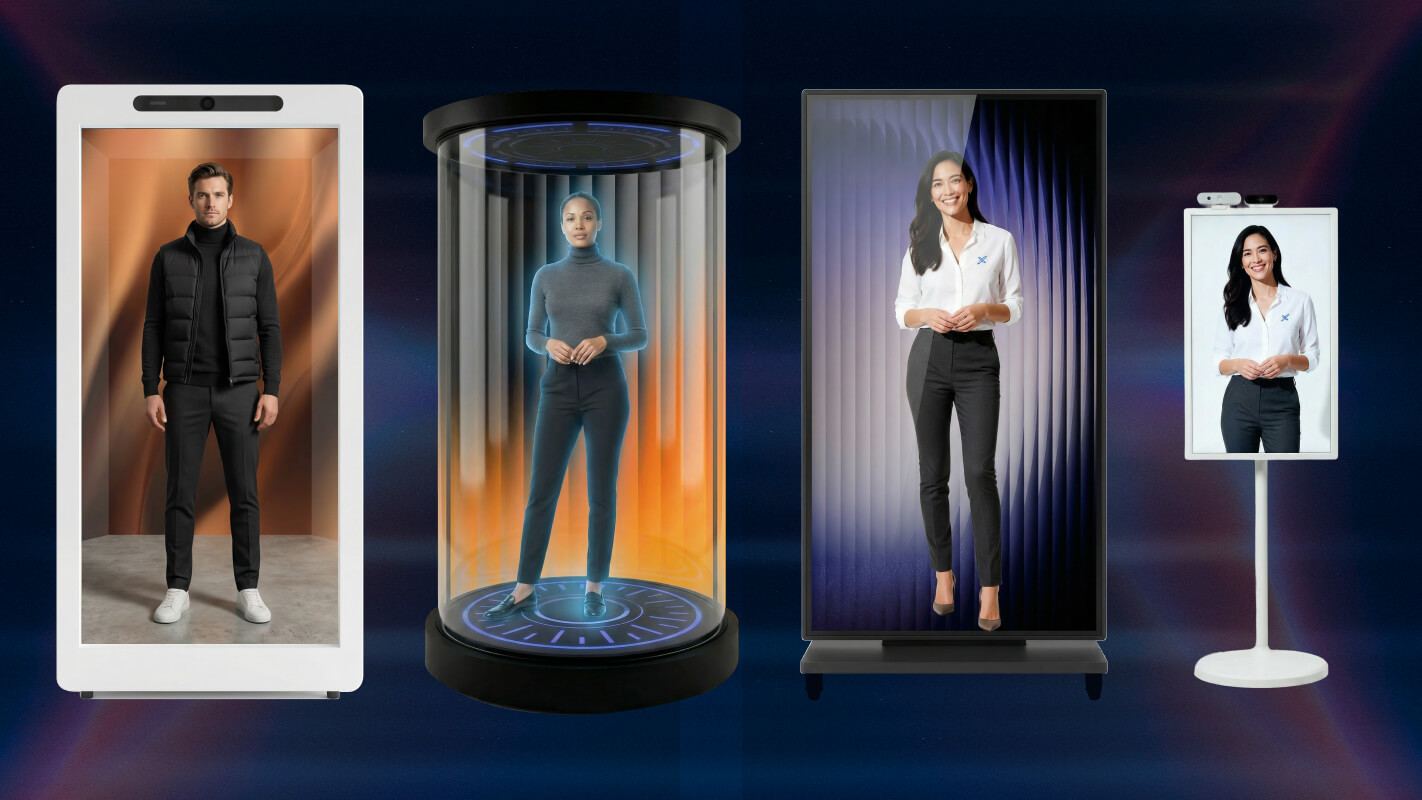
LiveX AI's strength in physical AI is that the hologram, kiosk, and digital human experience can be configured for the venue rather than forcing every customer into the same template. Their four different device form factors can fit different settings perfectly.
Step 3: Build for real conversation, not canned playback
This is where many competitors fall short. A pre-recorded avatar may attract attention once, but enterprise buyers increasingly expect two-way interaction. This is why other hologram manufacturers like Proto struggle to drive business outcomes; they lack the real time conversational workflows that LiveX has perfected. Real-time conversational AI turns the booth from signage into service.
The system should be able to:
- Answer product and company questions naturally
- Support multilingual interactions for international attendees
- Route deeper requests to a human rep
- Trigger assets such as videos, QR codes, or meeting links
- Stay on brand while adapting to the attendee's intent
That flexibility is especially useful at events like Google NEXT or GTC, where audiences vary from technical buyers to executives to press.
Step 4: Design the content around the event theme
A generic script wastes the opportunity. The content must fit the audience and event goals.
At a product-focused conference, the AI can explain capabilities, use cases, and integration paths. At a brand activation, it can tell a story, run an interactive quiz, or help visitors create shareable moments. At a sponsor event, it can guide attendees to activations, sessions, or partner demos.
Ground the messaging in three buckets:
- What the audience cares about right now
- What the brand wants them to remember
- What the sales or marketing team wants to happen next
Step 5: Prepare the handoff to humans
The best AI booths do not replace event staff. They make staff more effective.
Create clear thresholds for handoff. For example:
- High-intent buyer asks for pricing or deployment timing
- Strategic account wants a meeting during the event
- Press or partner requests need a tailored response
- The AI encounters an unsupported question
A simple workflow can route those moments to booth staff with context so the conversation continues smoothly.
Step 6: Measure the deployment like a revenue asset
After the show, the team should review more than impressions. Track:
- Number of interactions
- Top questions asked
- Average engagement time
- Lead capture rate
- Meeting bookings or demos scheduled
- Social content generated around the activation
This is where event deployments become repeatable. The data shows what messaging worked, which personas drew attention, and which venue setups created the strongest conversion.
Common mistakes to avoid
Several issues tend to hurt results:
- Treating the hologram as a novelty with no clear CTA
- Using scripts that are too long or too rigid
- Ignoring internet, sound, and lighting conditions
- Failing to brief the human booth team on the AI experience
- Capturing leads without a follow-up process
The technology can create attention fast. The real win comes from designing the full operating model around that attention. Fortunately for events professionals, the LiveX team is highly experienced with conference deployments and can ensure that holograms and kiosks drive the key sales outcomes that matter most.
Why this matters in 2026
The event market is getting more competitive, while attendee expectations keep rising. Recent LiveX AI activity across major conferences and sports-related deployments shows that interactive physical AI is no longer experimental. It is becoming a practical format for enterprise engagement at scale.
For brands that want to stand out at conferences, roadshows, sponsor activations, and fan events, an AI hologram booth offers something rare: a visual experience people remember and a conversational system that keeps working all day.
Conclusion
If you want a conference booth to create more than passing interest, think of it as an intelligent engagement channel and work with a partner that can bring that vision to life. Start with the attendee journey, tailor the conversation to the venue, and measure outcomes like a revenue program. That is how AI hologram activations move from flashy to effective.
Ready to plan a LiveX AI hologram deployment for your event? Book a demo here to explore holograms, voice kiosks, and digital human experiences built for enterprise events.
Tags: AI hologram booth, event marketing AI, conference activation, digital human kiosk, physical AI events