
Selfie guests converted into Bonvoy loyalty members
Tier 1 sponsors, Google and NVIDIA, paid to brand the screen
Guest sessions on peak travel day
Property rollout: model expanded to the SF Marriott Marquis
A great hotel, a hard place to get a quick answer.
The San Jose Marriott sits at the center of Silicon Valley's conference economy. When GTC or a World Cup match fills the lobby, thousands of guests arrive with the same small questions: where to eat, how to find the ballroom, what's happening this weekend. The answers are scattered across a front desk, a printed map, and an app. For international travelers, a language barrier makes every one of those questions harder.
The team also faced a commercial question every event hotel knows: corporate clients choose properties partly on activation capability. Standing out to win those contracts, and making the guest experience pay its own way, was the real brief.
The hotel didn't want a one-off gadget that went dark after a conference. It wanted infrastructure: something that stayed useful for everyday guests and earned its keep commercially.
One partner for the hardware, the AI, and the business model.
The hotel evaluated its options against four criteria, and they're the same four we'd tell any property to demand.
A complete system, not a science project
LiveX delivers the Tower hardware, the Lyra AI avatar, content management, and support as one accountable vendor, installed and live in days, not a systems-integration quarter.
Conversation that feels human
Roughly 2-second response time and support for 140+ languages, so a guest from anywhere can walk up and simply talk. No menus, no QR codes, no queue.
Enterprise-grade trust
SOC 2 Type II certified, with guest privacy handled to hospitality-brand standards. The property controls what the concierge knows and says.
A model that pays for itself
A rental and revenue-share structure that turns the installation from a cost line into a commercial surface. Sponsors underwrite the guest experience.
First, the everyday job: a concierge that never sleeps.
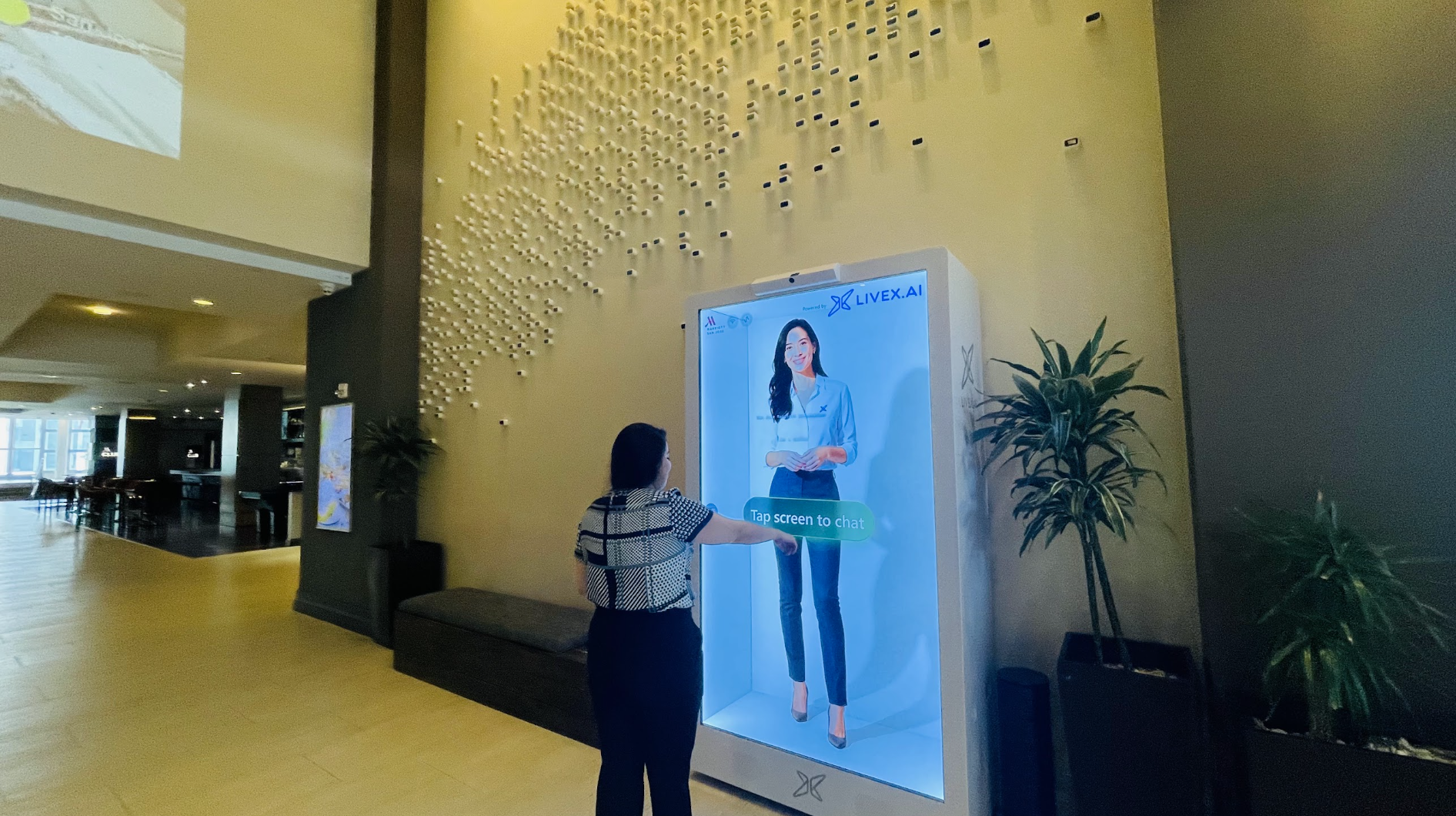
A LiveX Tower running the Lyra avatar went into the lobby for GTC 2026, and never left. Guests walk up and ask, in whatever language they speak: hotel information, local restaurant and event recommendations, wayfinding with integrated floor maps. The hotel refreshes Lyra's knowledge as events change, so the experience never feels frozen in the week it launched.
Then, the revenue job: Google and NVIDIA paid to be on the screen.
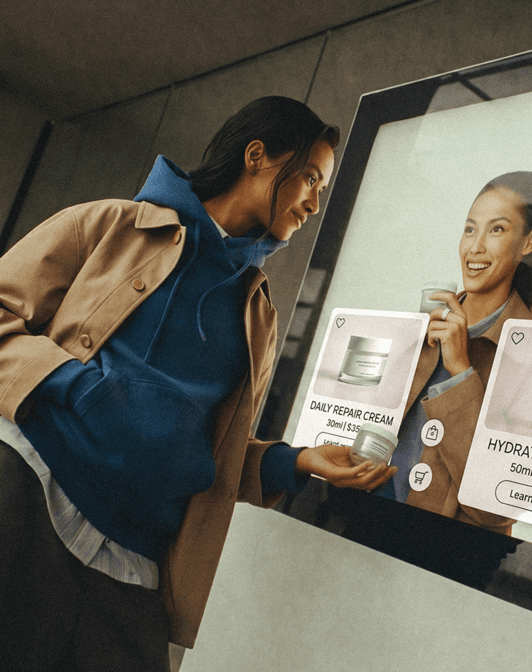
During World Cup festivities at Levi's Stadium, Google and NVIDIA sponsored a co-branded selfie activation on the Tower. Two Tier 1 technology companies wrote checks to appear on a screen in the hotel's lobby, turning a guest-engagement space into sponsored inventory.
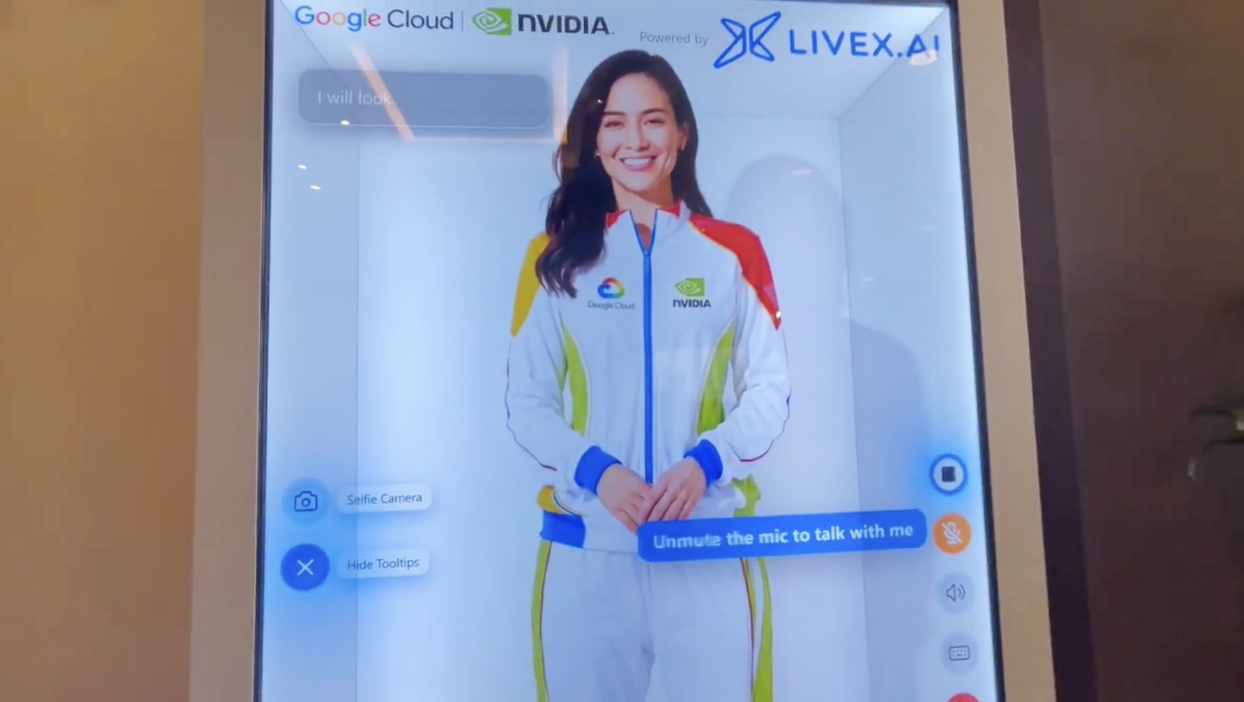
And the loyalty job: a selfie that becomes a member.
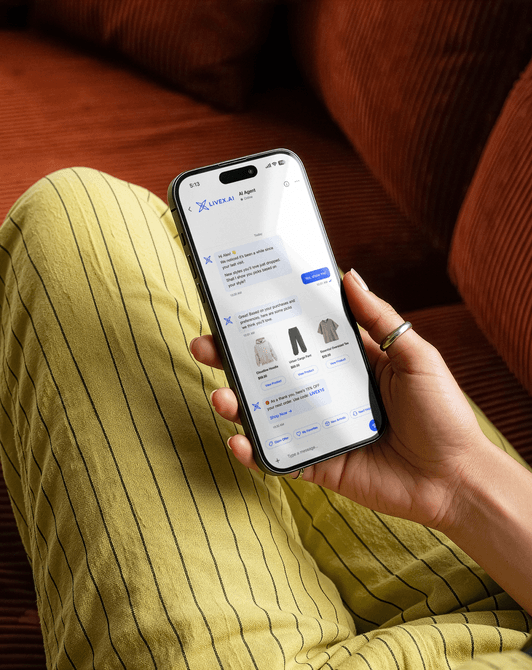
Marriott then ran its own Bonvoy World Cup selfie experience, extending the FIFA partnership guests already recognized. The selfie moment doubled as an on-ramp into Marriott Bonvoy, and roughly 1 in 10 participating guests signed up on the spot. That's the hardest part of loyalty acquisition, catching someone in a genuinely fun moment, made repeatable.
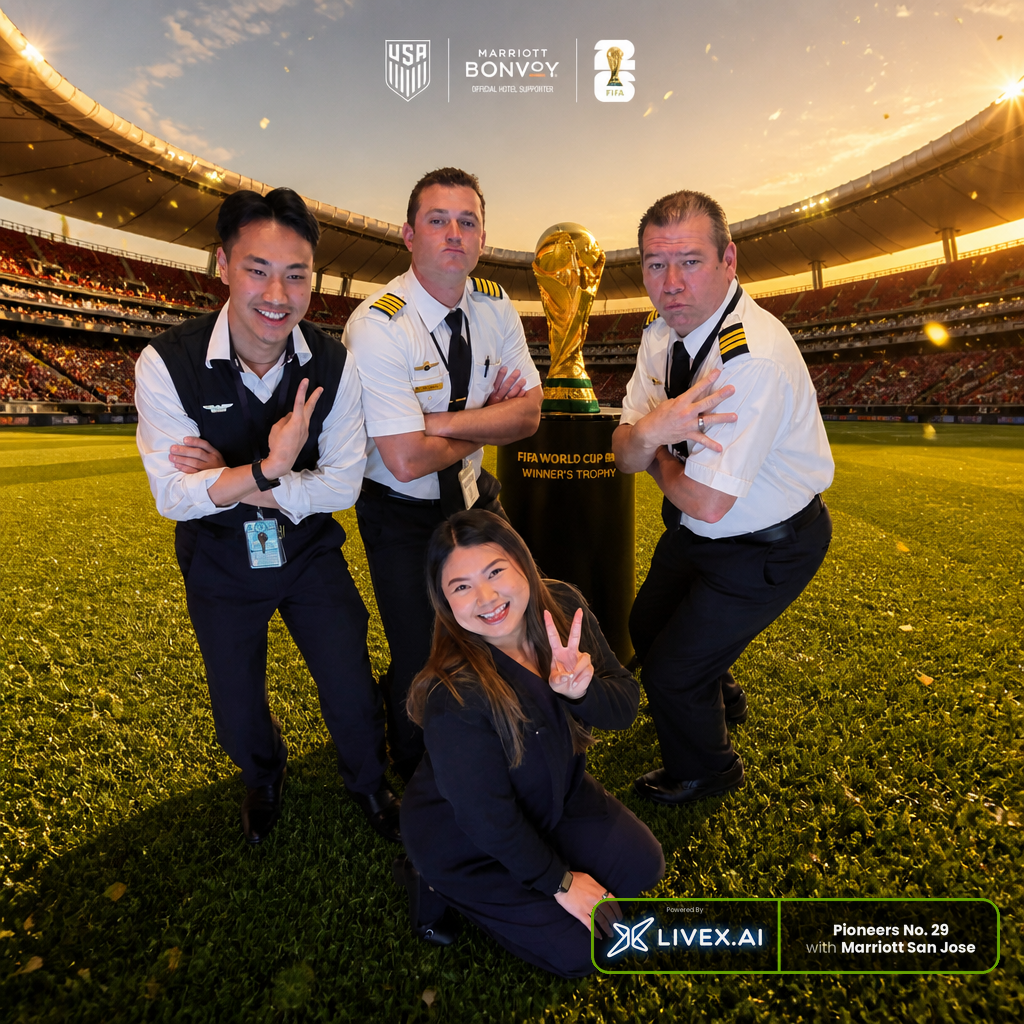
One installation, three jobs, and it never got unplugged.
By the end of the World Cup run, the same Tower was serving guests in languages from Spanish and Russian to French and Chinese, generating sponsored revenue from two Tier 1 partners, and converting 1 in 10 selfie participants into Bonvoy members. What went in for a single conference became permanent infrastructure on a rental and revenue-share model.
The model is already traveling.
The San Jose deployment became the baseline for the San Francisco Marriott Marquis rollout. The same playbook of everyday concierge, sponsored activations, and loyalty capture, now at Marriott's San Francisco flagship. One property proved it; the next one copied it.